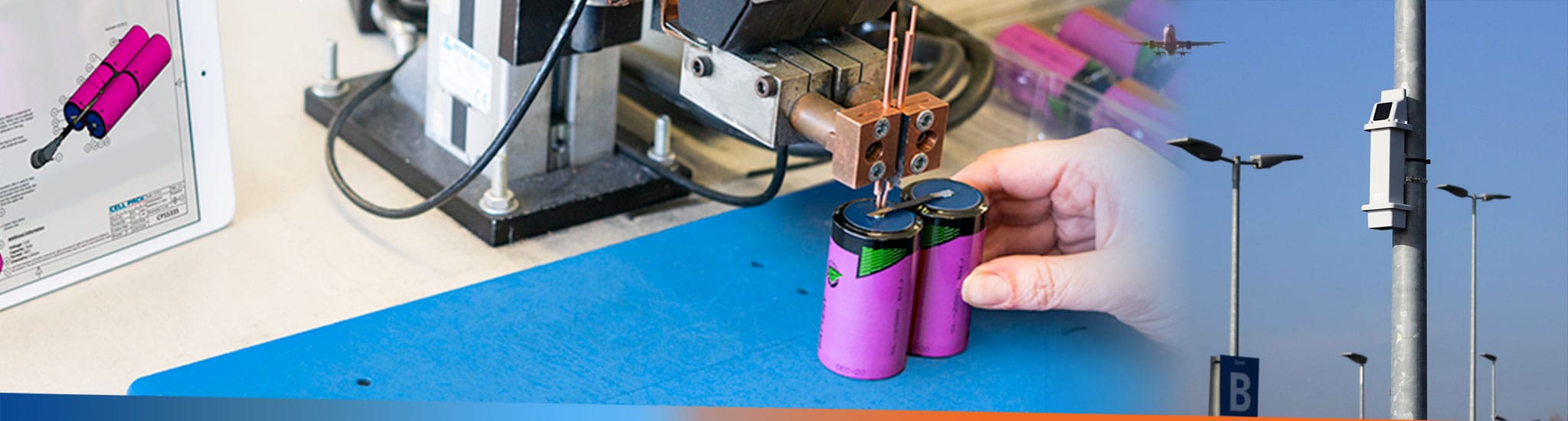
As the Internet of Things (IoT) continues to grow, so does the need for reliable, long-lasting power sources. Whether it’s a smart meter, environmental sensor, or industrial tracker, every IoT device depends on a battery that can last for years, not months.
In 2026, Tadiran Primary lithium batteries remain the benchmark for long-life IoT power. But what makes them different from other lithium chemistries, and what should you look for when choosing a primary battery for IoT applications?
Let’s break it down.
Tadiran batteries use lithium-thionyl chloride (Li/SOCl₂) chemistry, a technology proven to deliver exceptional energy density and ultra-low self-discharge.
Unlike rechargeable lithium cells, Tadiran’s bobbin-type construction is optimised for low-drain, long-duration use, making it ideal for IoT applications that transmit data intermittently or remain in sleep mode for most of their life.
That reliability is why Tadiran cells power millions of IoT devices worldwide, from water meters and GPS trackers to industrial sensors and remote monitoring systems.
Not all lithium batteries are created equal. While many look similar, the chemistry and internal design determine their true performance and lifespan, especially in IoT devices.
| Battery Type | Nominal Voltage (V) | Typical Capacity (AA) | Best For | Limitations |
|---|---|---|---|---|
| Tadiran Li/SOCl₂ (Bobbin Type) | 3.6 | 2.4Ah | Long-life IoT sensors, smart metering, tracking | Limited pulse current |
| Spiral Li/SOCl₂ | 3.6 | 1.2Ah | High-pulse, short-duration use | Higher self-discharge |
| Li-MnO₂ (Lithium Manganese Dioxide) | 3.0 | 1.4Ah | Consumer and industrial devices | Shorter lifespan |
| Alkaline | 1.5 | 2.8Ah | Low-cost electronics | Poor performance at low temperatures |
Tadiran batteries consistently outperform other chemistries when long-term reliability is key. With energy densities up to 710 Wh/kg, they offer the highest energy density of any primary cell available today.
Choosing the right IoT battery isn’t about finding the highest capacity on paper i it’s about selecting a chemistry that delivers dependable performance over years of use.
Tadiran’s cells are engineered to release energy slowly and steadily, maintaining a consistent voltage over time. This makes them ideal for sensors, meters and trackers that only require small, periodic bursts of power.
For IoT devices that transmit via LoRa, NB-IoT or LTE-M, Tadiran’s PulsesPlus™ technology combines a primary lithium cell with a hybrid layer capacitor, providing high pulse capability without compromising lifespan.
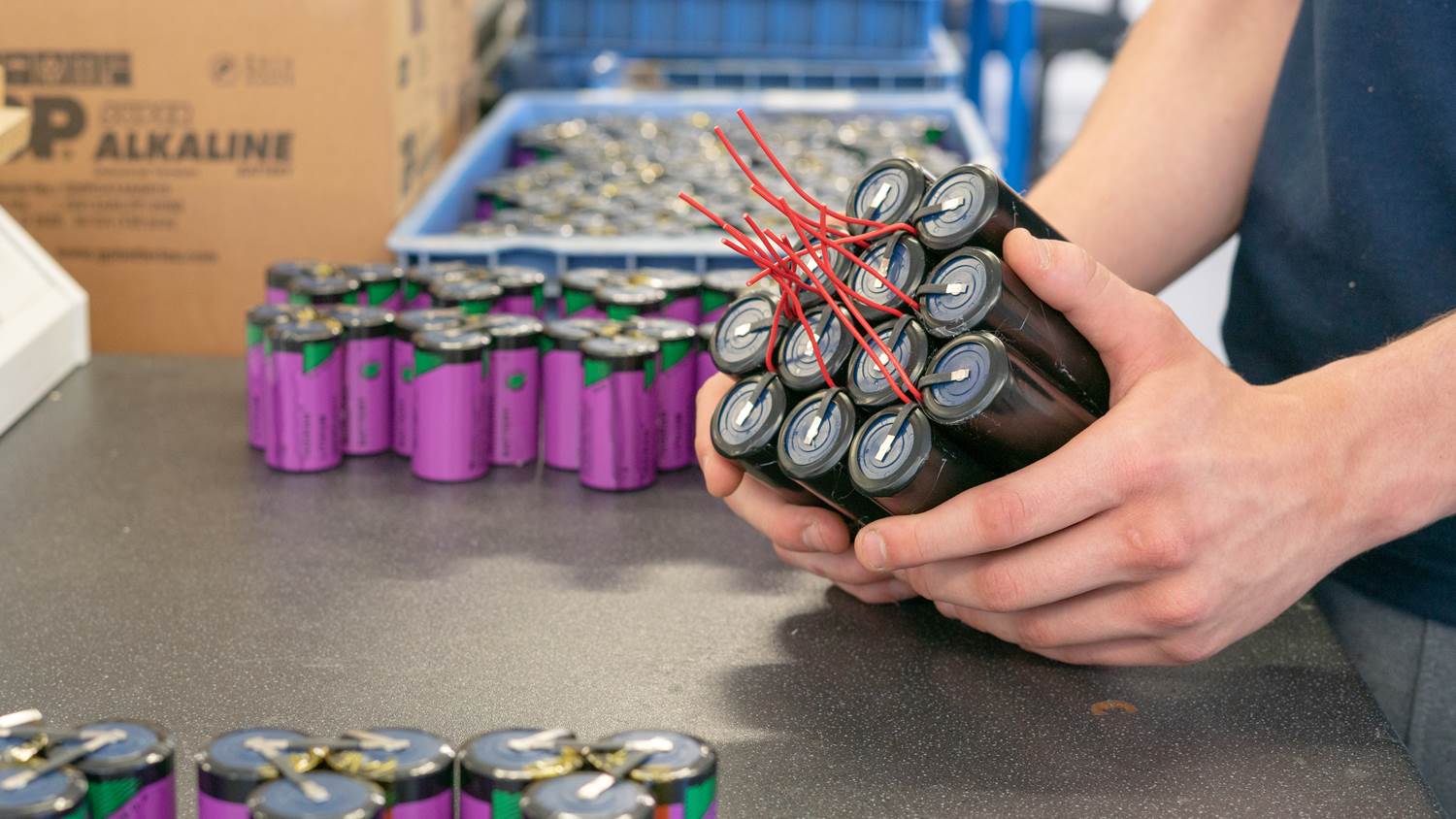
The IoT market is evolving rapidly and battery requirements are becoming more demanding. Here are five essential factors to consider when selecting a primary battery for IoT devices this year:
If your device needs to last 10–20 years without maintenance, choose Li/SOCl₂ chemistry. Rechargeables may seem appealing but often underperform in long-term, low-drain environments.
A high-capacity cell means little if it drains itself over time. Tadiran’s 0.7% annual self-discharge rate ensures your IoT battery retains over 85% of its energy after 20 years.
Many IoT sensors transmit intermittently. Select a cell capable of handling short, high current pulses or pair it with a hybrid capacitor for stability.
IoT devices often face extreme conditions. Tadiran cells function reliably from –55°C to +85°C, outperforming alkaline and other lithium chemistries.
The best IoT battery isn’t always the cheapest upfront. A longer-lasting cell reduces replacements, site visits, and downtime; critical for remote or hard-to-reach installations.
Tadiran is one of the few manufacturers to have verified 40-year battery performance under real-world conditions. Their cells have powered long-term data loggers, metering systems, and sensors continuously since the 1980s.
The XOL and PulsesPlus™ ranges remain the industry standard for long-term primary power, now enhanced to meet the demands of next-generation IoT systems.
In 2025, IoT networks are larger, smarter and more connected than ever. Choosing the right IoT battery can make the difference between a system that runs for decades or one that fails in a year.
Tadiran batteries are trusted because they offer:
For remote devices that can’t afford to fail, Tadiran remains the global benchmark for primary lithium battery reliability.
At Cell Pack Solutions, we’ve partnered with Tadiran for over two decades to provide custom battery packs and expert advice for industrial, utility and security applications.
Whether you’re designing a new IoT device or optimising an existing one, we can help you find the ideal Tadiran cell or configuration to meet your power and longevity requirements.